

Blood Safety Debate Continues as Patients Demand the Right to Choose Their Donors
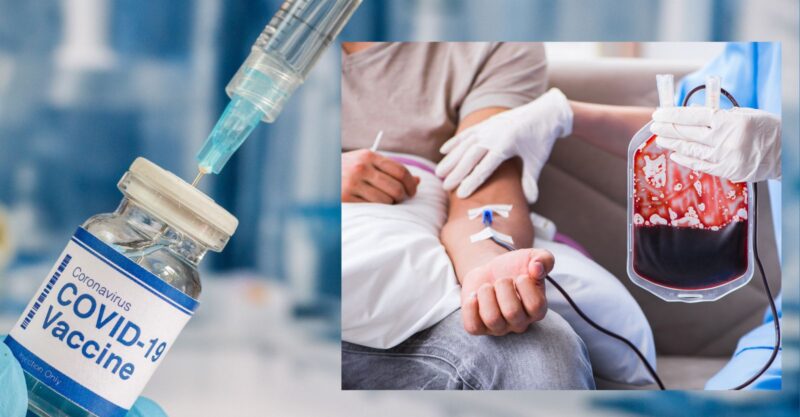
Questions about blood safety, informed consent and patient rights continue to fuel debate as physicians, researchers and patient advocates call for greater transparency and patient choice in blood transfusions.
The issue was discussed during an interview earlier this year hosted by Dr. Drew Pinsky, featuring SafeBlood researcher Dr. R. Clinton Ohlers and U.S. attorney Tom Renz.
During the program, Ohlers outlined concerns raised by patients who want the ability to select blood donors for transfusions—particularly if they wish to avoid blood from donors who received COVID shots.
Advocates say the issue ultimately comes down to informed consent and patient autonomy, arguing that individuals should have the right to know and choose the source of blood they receive during medical procedures.
Directed Donations Becoming More Difficult
Before 2020, requesting a directed blood donation—blood from a specific donor such as a family member or friend—was widely accepted practice in many healthcare systems.
Today, policies vary widely between hospitals and blood banks. According to Ohlers and the SafeBlood initiative, some patients report being denied the option or told it is not medically necessary.
In the United States, access to directed donations often depends on both hospital policy and the blood bank supplying that hospital. If either institution discourages the practice, the patient may be unable to proceed.
Some patients have reportedly traveled across state lines to hospitals that will allow them to designate their donor.
In parts of Europe, advocates say directed donations have become even more restricted, leaving patients with little control over the source of transfused blood.
Lessons From the HIV Blood Supply Crisis
Advocates raising concerns about transfusion policies often point to the early years of the AIDS epidemic.
A retrospective analysis by the National Academies of Sciences, Engineering, and Medicine (originally Institute of Medicine) found that thousands of hemophilia patients contracted HIV through contaminated blood products before adequate protections were implemented.
The report identified several systemic failures, including:
-
Underestimating potential risk
-
Overreliance on industry influence in policy decisions
-
Waiting for absolute scientific certainty before taking precautionary action
Advocates say the historical episode demonstrates why transparency and caution are important when emerging questions arise about blood safety.
Debate Over Possible Injection-Related Components in Blood
Another point raised during the interview involves scientific questions about whether components associated with mRNA COVID shots could circulate in blood for extended periods in some individuals.
Researchers have discussed findings such as:
-
detection of vaccine-related mRNA signals in certain contexts
-
detection of spike protein in plasma following injection in some individuals
-
reports of DNA plasmid fragments identified in vaccine vials and later detected in blood samples
Advocates say these findings warrant further independent investigation, particularly because blood transfusion transfers circulating components from donor to recipient.
Other medical authorities maintain that existing evidence shows no transfusion-related risk linked to COVID shots.
Researchers have also raised concerns about abnormal clotting patterns linked to spike protein exposure. A recent peer-reviewed study analyzing blood samples reported amyloid fibrin microclots in all vaccinated participants examined in the cohort, with significantly larger clot burdens in individuals diagnosed with “Long COVID.”
The “Baby Alex” Case
One case frequently cited by advocates involves a newborn known publicly as “Baby Alex,” who reportedly died after developing an unusually large blood clot following a transfusion.
According to accounts discussed during the interview, the clot formed within hours and extended from the infant’s knee—where the transfusion was administered—to the heart.
Supporters of further investigation say the case raises questions about rare but serious transfusion reactions. Critics argue that clotting complications can occur for multiple reasons and require careful analysis before drawing conclusions.
Are Patients Being Denied Autologous Blood?
Some physicians and patients have also raised concerns about access to autologous blood donation, meaning individuals bank their own blood ahead of surgery.
Autologous transfusion has historically been considered one of the safest approaches because patients receive their own blood rather than donor blood.
SafeBlood says it has received anecdotal reports of patients requesting to bank their own blood for surgery but being denied unless the procedure was deemed medically necessary.
In one reported case, a patient preparing for heart surgery was allegedly refused both directed donations from family members and the option of using his own stored blood. The patient ultimately avoided transfusion by using a cell-salvage system, which recycles a patient’s own blood during surgery.
What Is SafeBlood?
SafeBlood Donation is an international initiative focused on restoring patient choice and informed consent in blood transfusions.
The organization does not operate blood banks. Instead, it helps individuals build networks of compatible donors ahead of medical procedures.
SafeBlood currently operates two platforms:
SafeBlood U.S.
A registry focused on connecting donors and recipients within the United States.
SafeBlood Europe
A platform supporting donor networks across parts of Europe, including: Czech Republic, Germany, Switzerland (German, French and Italian regions), Hungary, Austria and Slovakia
According to the organization, the goal is to help patients prepare before a medical emergency occurs, allowing families and communities to identify compatible donors ahead of surgeries, complicated pregnancies or other procedures where transfusion may be required.
A Note of Caution About Online Registries
Not everyone within the medical freedom community agrees with the use of donor databases.
Biologist Dr. Lidiya Angelova has warned that people concerned about blood safety should be cautious about submitting personal information to “unvaccinated donor” registries online, citing potential privacy and security risks if databases are compromised.
Angelova instead encourages patients to explore existing options such as directed donations, autologous donations and cell-salvage systems while advocating for broader patient choice within healthcare systems.
What About Canada?
In Canada, Canadian Blood Services maintains that the blood supply remains safe regardless of whether donors received COVID injections.
The agency states that individuals who received COVID shots can donate blood as long as they meet standard eligibility criteria and says there is no evidence of transfusion-related risk tied to COVID injections.
Canada’s blood system does not separate or label blood by COVID injection status, and patients generally cannot request blood specifically from donors who did not receive the injections.
Without such options, patients concerned about potential exposure have no ability to exercise informed consent.
🚨 Action Alert:
Tell Canadian Blood Services to Separate the Blood Supply
While debate over blood safety and patient choice continues, Canadian Blood Services is currently promoting a nationwide campaign encouraging Canadians to donate blood.
As part of the campaign, individuals who donate before March 31 are entered into a draw for round-trip tickets for two to any scheduled destination, courtesy of Air Canada.
The promotion has been widely shared across social media to encourage participation.
Use this moment to demand greater transparency and patient choice in the blood system.
What You Can Do
Contact Canadian Blood Services and tell them:
-
You support blood donation — but patients deserve informed consent and the right to choose their donors.
-
Canada should separate the blood supply so patients can make informed choices about transfusions.
-
Until that happens, you cannot support promotional campaigns encouraging donations.
Contact Canada’s federal Health Minister, Marjorie Michel, and urge her to ensure greater transparency and patient choice in the national blood system.
Ask the minister to support policies that:
-
Protect the right to directed donations
-
Allow patients to request blood from donors who did not receive COVID injections
-
Ensure informed consent in transfusion medicine
- Tell her you will not donate blood until Canadians have true informed consent
The issue ultimately comes down to a simple principle:
Patients should have the right to know—and choose—the source of the blood they receive.
Sources:
SafeBlood Donation — “What is the Evidence, Who is Being Denied, and The AIDS Crisis Revisited: Unsafe Blood – Dr. Drew Interview”
SafeBlood Donation — U.S.
SafeBlood Donation — Europe
Dr. Lidiya Angelova ,Genuine Prospect Substack — “Don’t Put Your Data in Unvaccinated Blood Databases”
Nicolas Hulscher, Focal Points Substack — “Breaking Study: Anomalous Amyloid Microclots Found in Vaccinated Individuals”
Canadian Blood Services — COVID-19 vaccines and blood donation guidance
National Academies of Sciences, Engineering, and Medicine — HIV and the Blood Supply: An Analysis of Crisis Decisionmaking (1995)
*******************************************************************************************************************
If you find value in the work we do at Children’s Health Defense Canada, please consider making a donation so we may continue to advocate for and protect our most valuable resource…our children.