Toronto Public Health Backs Down: 30,000 Students Will Not Be Suspended Over Vaccine Records
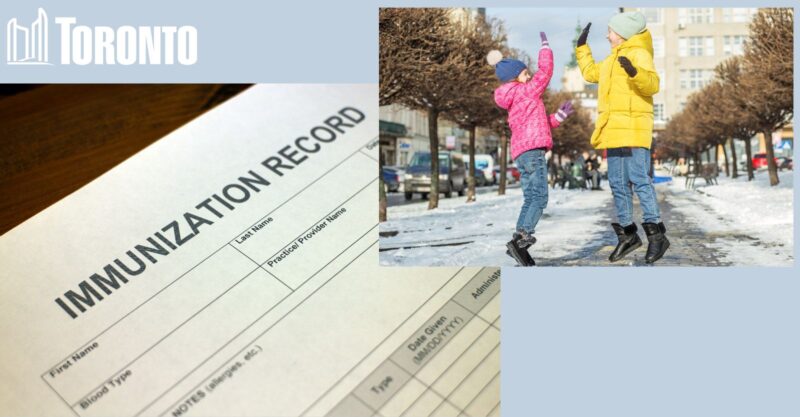
Thousands of Toronto students who were threatened with suspension over vaccination records will now remain in school for the rest of the academic year.
Toronto Public Health has quietly backed away from enforcing school suspensions tied to vaccine records after the scale of the policy became impossible to ignore.
According to a recent announcement, approximately 30,000 Toronto students will not be suspended this school year despite outstanding vaccination records.
At the beginning of the school year, more than 50,000 student records were flagged as incomplete or not up to date, prompting warning letters sent to families across the city.
Under Ontario’s Immunization of School Pupils Act (ISPA), students can be suspended from school if vaccination records are not filed with public health or if parents do not submit a formal exemption.
But with tens of thousands of records unresolved, Toronto Public Health has now paused suspension orders for the remainder of the school year, saying the move will allow families more time to update records.
For many parents and advocates, the situation reveals a deeper problem: the policy itself is legally and constitutionally flawed.
Growing Legal Concerns About the Immunization of School Pupils Act
The Immunization of School Pupils Act conflicts with the Canadian Charter of Rights and Freedoms.
Under Section 52 of the Constitution, any law inconsistent with the Charter is “of no force or effect.”
Several Charter protections may be implicated in school vaccine suspension policies.
Section 2 – Freedom of Expression
Parents seeking a conscience or religious exemption must sign a government-written affidavit in order to access that right. This constitutes compelled speech, forcing parents to swear statements written by the government rather than their own words.
Section 7 – Security of the Person
The Charter protects individuals from arbitrary government action that interferes with personal autonomy. Suspending children from school over medical records or health decisions raises questions about whether those rights are being unjustifiably restricted.
Section 8 – Protection Against Unreasonable Search
Parents are often required to disclose private medical records to public health authorities in order for children to attend school. This constitutes an unreasonable intrusion into personal health information.
Section 12 – Protection From Cruel and Unusual Treatment
Some families report children being removed from class, held in offices or publicly told they must receive vaccines before returning to school — situations that lead to humiliation and coercion.
Section 15 – Equality Rights
The law applies only to children. Adults working in schools are not required to provide vaccination records, and students over the age of 18 are not subject to suspension orders.
This creates age-based discrimination, raising further Charter concerns.
Who Actually Has the Power to Suspend a Student?
Another issue raised by parents and legal advocates is who actually has the authority to suspend students.
Public health officials may issue orders recommending suspension under the ISPA.
However, under Ontario law, only school principals have the authority to issue a legal suspension under the Education Act.
Without a formal Notification of Suspension from the school, parents argue there may be no lawful basis for excluding a child from class.
This distinction has created confusion across Ontario.
In some cases, families report being told their child cannot attend school based solely on a public health notice, without the proper procedures required under the Education Act.
Privacy and Data Concerns
Parents have also raised concerns about the collection and storage of children’s medical information.
Ontario’s Personal Health Information Protection Act (PHIPA) governs how personal health data can be collected and shared.
Yet vaccination records are often requested, stored, and exchanged between public health units and schools.
Those concerns intensified after Hamilton’s suspension program was paused during a cybersecurity incident involving the city’s IT systems, raising questions about how securely sensitive medical data is handled.
A Policy Under Strain
Toronto’s decision to pause suspension orders may reflect more than administrative backlog.
With 30,000 students potentially facing exclusion, enforcement at that scale could have removed enormous numbers of children from classrooms across Canada’s largest school system.
The move effectively keeps thousands of students in school — at least for now.
But it also highlights the growing tension between public health enforcement policies and the constitutional rights of families.
As parents continue to challenge school vaccine suspension policies across Ontario, the legal and constitutional debate around the Immunization of School Pupils Act may be far from over.
For the moment, however, 30,000 Toronto students will remain in school rather than being removed over vaccine records.
We call that a VICTORY.
******************************************************************************************************************