

Pfizer Reboots Lyme Vaccine Linked to Autoimmune Arthritis Concerns and Past Lawsuits
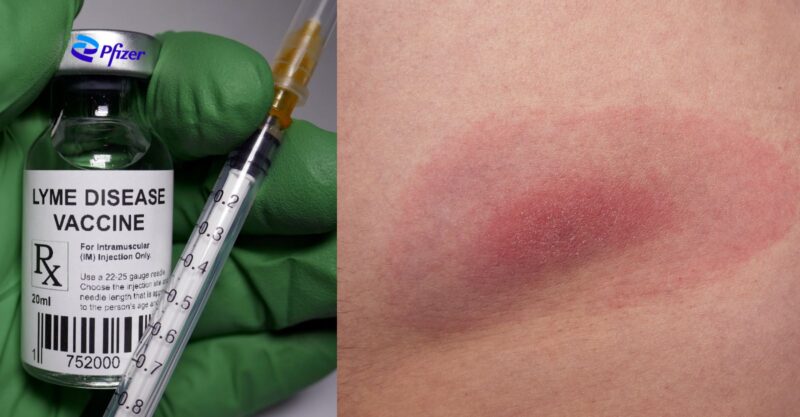
A revived Lyme shot moves toward approval—despite failed endpoints, past safety concerns and unanswered questions
Reporting by independent journalist Jon Fleetwood highlights that Pfizer’s experimental Lyme disease vaccine revives the same biological mechanism previously tied to autoimmune arthritis concerns, lawsuits and the collapse of LYMErix.
Now, despite falling short of its key trial benchmark, Pfizer is moving forward with plans to seek approval from the U.S. Food and Drug Administration—raising renewed questions about safety, transparency and regulatory standards.
There is currently no Lyme shot available in Canada, according to the Public Health Agency of Canada, making this the first potential product to enter the Canadian market in more than two decades.
Failed Endpoint — But Moving Ahead Anyway
Pfizer and its partner Valneva reported more than 70% effectiveness in late-stage trials—but the shot failed to meet its primary endpoint, meaning it did not reach the pre-set statistical threshold for success.
Despite this, the companies say they will proceed with regulatory submission, calling the results “clinically meaningful.”
Critics say redefining success after a failed endpoint raises serious questions about how approval decisions are being made.
The Phase 3 trial includes participants in Canada, meaning Canadians are already part of the data being used to support regulatory approval.
A Mechanism That Activates Inside the Tick
As detailed in Fleetwood’s reporting, the shot is designed to generate anti-OspA antibodies that circulate in the bloodstream—but are only activated when a tick feeds.
When a tick bites:
- It ingests these antibodies through the blood meal
- The antibodies bind to Borrelia bacteria inside the tick
- Transmission to the human host is blocked
The immune response is created in the body—but intended to function inside the parasite.
Same OspA Strategy Behind LYMErix
This approach mirrors LYMErix, introduced in 1998 and later withdrawn by GlaxoSmithKline. At the center of the controversy was molecular mimicry—where a bacterial protein resembles a human protein closely enough that antibodies may target both.
The OspA protein used in Lyme vaccines has been shown to share structural similarities with LFA-1, a protein found in immune cells and joint tissue. This raised concerns that antibodies could cross-react with human tissue—particularly in joints—potentially triggering autoimmune responses.
LYMErix was also approved in Canada before being withdrawn, meaning the same controversy previously reached the Canadian market.
Lawsuits, Arthritis Reports and Market Collapse
Following LYMErix rollout, reports of treatment-resistant arthritis led to widespread concern and class action lawsuits.
Although regulators did not establish a definitive causal link, the combination of reported adverse events, media attention, legal pressure and declining public confidence ultimately led to the product’s withdrawal.
Same Immune Pathway, Reintroduced
The new Pfizer-Valneva shot uses the same OspA-based approach—now expanded across multiple strains.
Lyme disease itself is known to trigger immune-mediated arthritis in some patients, where symptoms persist even after the infection is no longer detectable.
At that stage, the illness is no longer driven by infection—but by immune activity.
The shot is designed to generate that same category of immune response, targeting a protein with known structural similarity to human tissue.
Boosters Required — And Immunity Declines
Protection from the shot appears to decline over time, with data suggesting reduced effectiveness after roughly 18 months—necessitating booster doses.
This creates repeated cycles of immune stimulation centered on the same antibody response.
The duration of protection—and long-term immune effects—remain unclear.
Key Gaps Remain
Despite advancing toward approval, major questions remain unanswered:
- Where do these antibodies travel in the body?
- Do they interact with human tissues such as joints?
- What happens after repeated boosting over years?
Current trials primarily track antibody levels in blood—not how they behave in tissues.
Questions Around Origins Remain
Recent reporting highlighted by CHD Canada points to declassified U.S. government documents detailing large-scale tick experiments conducted during the Cold War.
Records describe the release of hundreds of thousands of ticks in environmental studies, as well as research into using insects as vectors for disease transmission.
In 2019, U.S. lawmakers called for formal investigations into whether military programs experimented with ticks or other insects as biological agents—and whether any were released outside controlled settings.
While Lyme disease is commonly described as a tick-borne illness, these findings raise broader questions about how the disease spread across North America—and whether past government activity may have influenced that trajectory.
Given shared ecosystems and migratory patterns, any environmental impact would not remain confined to one country.
A Familiar Pattern
The last Lyme shot collapsed under the weight of safety concerns, lawsuits and loss of public trust.
Now, a new version built on the same core mechanism is moving forward—despite unresolved scientific questions and incomplete long-term data.
With Health Canada historically aligning with U.S. regulatory decisions, approval in Canada could follow quickly if the product is cleared by the FDA.
This raises broader concerns about informed consent, regulatory independence and whether past lessons are being ignored.
Pfizer’s Lyme shot:
- Failed to meet its primary clinical endpoint
- Uses the same OspA-based mechanism linked to past controversy
- Relies on repeated boosting to sustain immune response
- Still lacks long-term data on immune effects and tissue interaction
Yet it is moving toward regulatory approval.
The science hasn’t answered the risks—but the rollout is already underway.
Sources:
Jon Fleetwood’s Substack, Pfizer Reboots Lyme Vaccine Linked to Lyme-Disease-Like Autoimmune Arthritis and Class Action Lawsuits
CHD’s The Defender, Pfizer Wants FDA to Approve Its Vaccine for Lyme Disease — But Does It Have a Shot?
*********************************************************************************************************************