
Nova Scotia Minister Says Parents Have No Rights Over Their Children
A heated exchange in Nova Scotia’s legislature is raising serious concerns about the role of parents in their children’s lives—and the growing authority of the state.
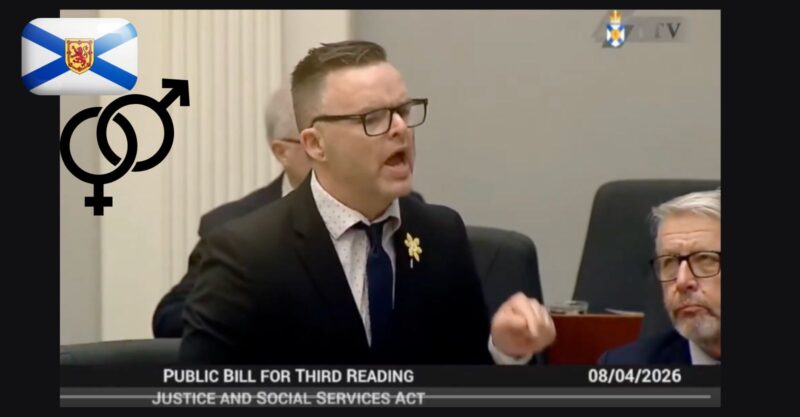
During a recent debate in the Nova Scotia House of Assembly, Education Minister Brendan Maguire pushed back against concerns over school policies related to gender identity, stating:
“I’ll be damned if I’m going to stand here and listen to someone say that the parents deserve rights over a child. No, they don’t. They absolutely don’t.”
His remarks came in response to questions about provincial policies that allow schools to support a student’s gender transition without notifying parents—and public funding for medical interventions in minors.
Policies That Sideline Parents
The debate was sparked by concerns over Nova Scotia’s longstanding guidelines for supporting transgender and gender non-conforming students. In place since 2014, the policy allows students in grades 7–12 to adopt new names, pronouns and gender identities at school without parental consent if they are deemed capable of making that decision. At the same time, schools are instructed not to disclose a student’s gender identity to parents without the student’s permission, a practice critics say effectively removes parents from critical decisions involving their children’s psychological and emotional development.
Organizations like the Citizens’ Alliance of Nova Scotia have raised alarms about the lack of transparency and oversight, warning that families are being deliberately excluded.
Medical Interventions Without Clear Safeguards
Concerns extend beyond the classroom into the healthcare system. Nova Scotia provides public funding for gender-related medical interventions for minors, including puberty blockers and cross-sex hormones, with eligibility beginning after the onset of puberty—often as early as ages 8 to 14. Critics point out that there is no clearly defined minimum age, and argue there is insufficient emphasis on long-term risks or meaningful parental involvement in these decisions.
While government officials maintain these policies are intended to protect vulnerable youth, particularly those who may face harm at home, opponents argue they presume parental risk rather than prioritize family engagement, shifting authority away from parents and toward institutions.
Parents “absolutely don’t” deserve to have rights over their children, Nova Scotia Education Minister Brandan Maguire says, as he voices support for secret gender transitions at schools and taxpayer-funded gender reassignment surgeries. pic.twitter.com/qs5yxjqCyJ
— Rebel News (@RebelNewsOnline) April 27, 2026
A Broader Shift in Authority
Maguire’s comments have intensified an ongoing national debate over who ultimately holds responsibility for children—their parents or the state. Advocates for parental rights argue that removing families from key decisions undermines trust, accountability and the foundational role of parents in safeguarding their children’s well-being.
They also question whether minors can meaningfully consent to life-altering social and medical interventions, particularly when long-term data remains limited and evolving. Supporters of current policies, however, frame them as necessary protections for individual autonomy and safety, especially for youth who may not feel supported at home.
What’s at Stake
At its core, this debate reflects a deeper tension in Canadian society between institutional authority and family rights. As similar policies continue to evolve and expand across provinces, many parents are asking whether their role is being diminished in decisions that carry lifelong consequences for their children.
The outcome of this debate may shape not only education and healthcare policy, but also the broader relationship between families and the state in Canada.
Source:
Zero Hedge, “Canadian Education Minister Says Parents Have No Rights Over Their Children”
****************************************************************************************************************