
McCullough Foundation WARNING: Silent Heart Damage in COVID-Vaccinated Children
Recent research is raising serious concerns about hidden heart injury in children following COVID mRNA vaccination.
1. Silent Heart Inflammation in Children
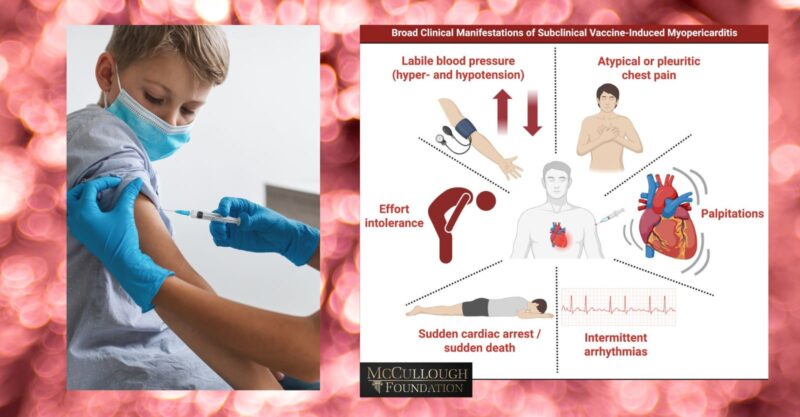
A peer-reviewed paper by the McCullough Foundation, presented by Nicolas Hulscher, MPH, highlights a condition called subclinical myopericarditis — a hidden inflammation of the heart muscle and surrounding tissue that often shows no obvious symptoms. According to the study, roughly 1–3% of COVID-vaccinated children may experience this type of heart injury.
In many cases, children appear outwardly healthy, and the first manifestation of the condition can be sudden cardiac arrest. Subtle or intermittent warning signs may include:
-
Palpitations or a “fluttering” heartbeat
-
Intermittent chest discomfort
-
Unusual fatigue or exercise intolerance
-
Blood pressure instability or heart-rate fluctuations
Hulscher emphasizes on his Facebook post that all COVID-vaccinated children should undergo cardiac screening, including ECGs, biomarkers (troponin, BNP, galectin-3, D-dimer), and, if indicated, cardiac imaging. Early detection is key — especially since outwardly healthy children can have microscopic heart injuries capable of triggering serious arrhythmias.
2. Why Subclinical Heart Injury Happens
The study explains that mRNA injections can leave Spike protein circulating in the body, which may trigger immune-mediated inflammation and microscopic heart tissue injury. This injury can:
-
Cause subtle myocardial damage, often undetected without testing
-
Lead to patchy fibrosis or edema visible on advanced imaging
-
Contribute to abnormal heart rhythms or conduction problems
Estimates suggest that 1–3% of vaccine recipients — including children and young adults — may experience measurable myocardial injury. Across millions of doses, this represents a significant public health concern.
3. Nattokinase — A Natural Supportive Option
Complementing this research, a breakthrough in-vitro study reported by Focal Points shows that nattokinase, a natural enzyme derived from fermented soybeans, can dissolve 84% of amyloid microclots within two hours, while reducing overall clot burden and amyloid intensity. Even at lower doses, nattokinase produced dose-dependent reductions in total clot numbers and amyloid signal.
Microclots are believed to contribute to heart inflammation, poor circulation, and vascular stress — factors closely linked to the subclinical heart injury described in the McCullough Foundation paper. While this research is currently lab-based and not a replacement for medical care, it suggests a potential natural pathway to support heart and vascular health, particularly for those affected by Spike protein-related injury.
4. What Parents Can Do
-
Prioritize screening: Arrange for cardiac evaluation for all vaccinated children, especially if they show any symptoms such as palpitations, fatigue or chest discomfort.
-
Track subtle warning signs: Even minor, intermittent symptoms should be discussed with a pediatric cardiologist.
-
Discuss supportive measures: While lifestyle interventions like moderate exercise restriction during recovery and cardiovascular monitoring are primary, natural options like nattokinase may support circulation — but only under professional guidance.
-
Stay informed: Follow independent research and emerging protocols for detecting and managing subclinical heart injury, including guidance from the McCullough Foundation.
5. Bottom Line
Silent heart damage in children is a real and potentially life-threatening concern. Screening is the first and most crucial step — without it, these injuries often go undetected. Emerging research, such as the nattokinase study, provides hopeful avenues for supporting cardiovascular health and reducing micro-clot burden, but these interventions must be approached cautiously and under medical supervision.
By combining awareness, early detection, and evidence-based supportive measures, parents can take proactive steps to protect their children’s heart health in the aftermath of COVID vaccination.
References:
-
McCullough Foundation, Focal Points Courageous Discourse COVID-19 Vaccine-Induced Subclinical Myopericarditis: Pathophysiology, Diagnosis, and Clinical Management, presented by Nicolas Hulscher, MPH.
-
Nicolas Hulscher December 4, 2025, Facebook post
-
McCullough Foundation, Focal Points Courageous Discourse, Study Finds Nattokinase Dissolves 84% of Amyloid Microclots in Two Hours, presented by Nicolas Hulscher, MPH.
Disclaimer: This article is for informational purposes only. CHD Canada does not provide medical advice, diagnosis or treatment. Parents should consult qualified healthcare professionals regarding any health concerns.
***********************************************************************************************************