

Health Canada Approves Gene-Edited Pigs for Food — Without Mandatory Labelling
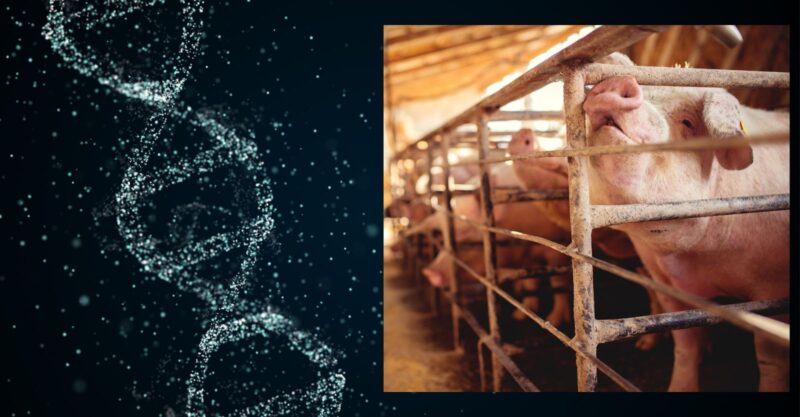
🚨 Health Canada has approved the use of GMO gene-edited pigs engineered to resist Porcine Reproductive and Respiratory Syndrome (PRRS) for use in food and animal feed, a decision that raises serious concerns about transparency, consumer choice and the direction of Canada’s food system.
The approval, announced on January 23, 2026, allows pork products from genetically engineered animals to enter the Canadian food supply without mandatory labelling. As a result, Canadians may never know whether the pork they purchase comes from gene-edited livestock.
CHD Canada shares the concerns raised by the Canadian Biotechnology Action Network (CBAN), which has strongly opposed Health Canada’s decision and warned that it deepens an existing transparency crisis in food regulation.
The pigs were developed by Genus PLC, a global animal genetics corporation, using the CRISPR gene-editing technique to make the animals resistant to PRRS — a virus that causes respiratory illness, reproductive failure, stillbirths and death in pigs. Health Canada and the Canadian Food Inspection Agency concluded that food from these pigs is “as safe and nutritious” as conventional pork and therefore does not require special labelling. Regulators also determined that environmental and indirect human health risks are no different from those associated with pigs currently on the market.
Canada now joins the United States, Brazil, Colombia and the Dominican Republic in approving this product for food use.
Safety Claims vs. the Right to Informed Consent
The core issue, however, is not simply how regulators have defined safety. It is that Canadians are being denied informed consent. There is no mandatory labelling of genetically engineered foods in Canada unless a specific health risk or nutritional change has been identified. This means consumers have no way of knowing whether the meat in their grocery cart comes from a gene-edited animal.
“If gene-edited pigs actually get produced and sold, Canadians won’t know if the meat in their grocery cart is from these genetically engineered animals,” said Lucy Sharratt, Coordinator of the Canadian Biotechnology Action Network. “Health Canada has approved meat from gene-edited pigs without any requirement to label it.”
This lack of transparency runs directly counter to public opinion. A national poll conducted in October 2025 found that 83% of Canadians want mandatory labelling of genetically engineered foods.
CBAN has warned that Health Canada’s decision sets a troubling precedent. While gene-edited animals are assessed for food use, gene-edited crop plants are increasingly exempt from food safety assessments altogether. At the same time, the federal government continues to rely on voluntary labelling standards that companies are not required to follow.
The approval also comes just weeks after Health Canada paused a separate decision that would have allowed meat from cloned animals to enter the Canadian market without safety assessments or labelling. That pause was attributed to “significant input” from the public and industry, underscoring that public concern can influence regulatory decisions — when it is acknowledged.
Canada has already played this role before. In 2017, Canadians became the first people in the world to consume a genetically engineered food animal when GE Atlantic salmon entered the market without labels. Production of that fish was quietly halted in 2024. The approval of gene-edited pork suggests the federal government is prepared to repeat this experiment, again without meaningful public debate or consumer choice.
CHD Canada stands with CBAN in calling for mandatory labelling of genetically engineered foods, including gene-edited animals. If governments are going to allow companies to engineer animals for the food supply, Canadians have a right to know what they are eating and to make informed decisions based on their values, health concerns and ethical considerations.
Transparency is not optional. It is fundamental to public trust.
Take Action
Sign/Share CBAN’s petition demanding mandatory labelling of genetically engineered foods HERE.
Sources:
Canadian Biotechnology Action Network
Government of Canada
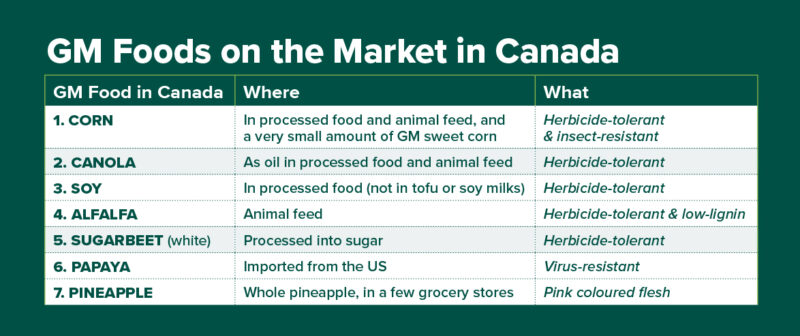
GM Foods Currently on the Market in Canada:
*****************************************************************************************************************************************************************************