

MAY is EMR Syndrome Awareness Month: Wireless Radiation and Health
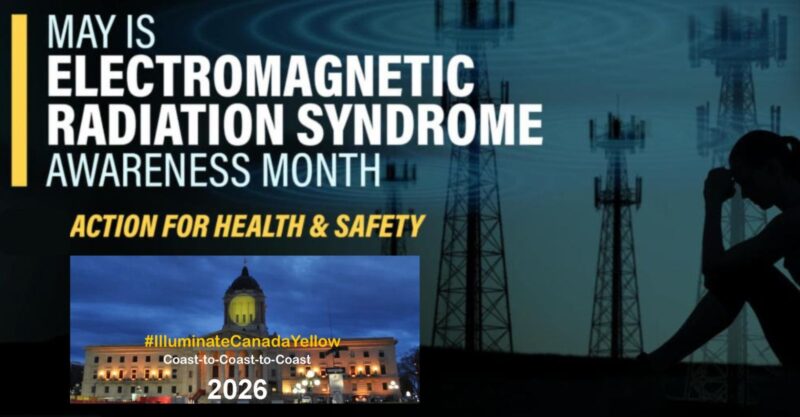
May is “EMR Syndrome Awareness Month” — a time to spotlight growing concerns about the potential health impacts of chronic exposure to human-made electromagnetic radiation (EMR).
From cell towers and Wi-Fi routers to Bluetooth devices, smart meters, tablets, laptops, and wireless earbuds, Canadians are now surrounded by technologies that emit radiofrequency (RF) radiation every day. While wireless connectivity has become deeply embedded in modern life, many scientists, physicians, advocates, and affected individuals say important questions about long-term health impacts remain unanswered.
EMR Syndrome — sometimes referred to as Electromagnetic Hypersensitivity (EHS) — describes a collection of symptoms that some individuals report after exposure to wireless radiation and electromagnetic fields.
Commonly reported symptoms include:
- Headaches
- Fatigue
- Brain fog
- Sleep disruption
- Dizziness
- Heart palpitations
- Tinnitus
- Difficulty concentrating
- Skin irritation or tingling sensations
Some individuals report that symptoms improve when they reduce exposure to wireless devices or leave high-exposure environments.
According to U.S.-based advocacy group 704 No More, approximately 1 in 8 Americans report experiencing health issues they associate with wireless radiation exposure. Advocates argue that many more may be affected without recognizing a possible connection.
As wireless infrastructure rapidly expands across Canada — including the rollout of 5G technology, smart city systems, wireless schools, and increased device use — concerns about involuntary exposure are also growing.
Calls for More Precaution
Critics say current wireless safety standards focus primarily on short-term thermal effects — the heating of tissue — while failing to adequately address potential long-term biological effects from chronic low-level exposure.
Organizations including the Canadian group Canadians for Safe Technology (C4ST) and Safe Tech Schools have raised concerns about scientific studies linking wireless radiation exposure to oxidative stress, sleep disruption, neurological symptoms, fertility impacts, and possible cancer risks.
The World Health Organization’s International Agency for Research on Cancer (IARC) classified radiofrequency electromagnetic fields as a Group 2B “possible carcinogen” in 2011 based on research associated with wireless phone use.
Since then, debate surrounding wireless safety has continued. Some researchers and advocacy groups argue newer studies support stronger precautionary measures, particularly for children, whose developing bodies may be more vulnerable to environmental exposures.
Health Canada maintains that exposure limits outlined in Safety Code 6 protect Canadians from established health effects of radiofrequency energy.
However, existing regulations do not sufficiently account for long-term cumulative exposure, non-thermal biological effects, or the realities of constant wireless exposure in schools, workplaces, apartment buildings and public spaces.
Concerns About Wireless Exposure in Schools
Wireless technology in classrooms has become a major concern for some parents, educators, and health advocates.
Groups such as Safe Tech Schools say children are now exposed to Wi‑Fi radiation for hours each day through tablets, laptops, wireless access points, smart boards, and personal devices.
Advocates are calling for:
- More wired internet connections in schools
- Reduced reliance on wireless devices
- Better public education about exposure reduction
- Independent long-term research
- Greater transparency around infrastructure placement
- More community consultation before installation of wireless antennas and towers
Some physicians and researchers have also urged governments to adopt more precautionary approaches while scientific debate continues.
Moving From Awareness to Action
For Canadians living with EMR Syndrome or related symptoms, awareness campaigns are about more than technology policy — they are about recognition, accessibility and quality of life.
Many affected individuals report difficulty finding medical support, securing accommodations, or even discussing their symptoms without dismissal.
Advocates say public awareness is essential as wireless technologies continue to expand into nearly every aspect of daily life.
During EMR Syndrome Awareness Month, organizations and community groups are encouraging Canadians to learn more, share information, and support informed public dialogue around wireless radiation and health.
Some practical exposure-reduction measures promoted by advocates include:
- Using wired internet connections when possible
- Turning off Wi-Fi at night
- Keeping wireless devices away from the body
- Using speakerphone or wired headsets instead of holding phones to the head
- Limiting unnecessary wireless exposure for children
- Reducing Bluetooth device use
Advocates emphasize that awareness alone is not enough.
As Canada’s wireless infrastructure continues to expand, they argue that public health discussions should include transparency, independent research, informed consent and the right of communities to participate in decisions that may affect their health and environment.
Learn More
Canadians for Safe Technology
– Protect Yourself and Your Family
– How to Stop a Cell Tower in Canada TOOLKIT
No more WiFi: How to wire your house for Internet
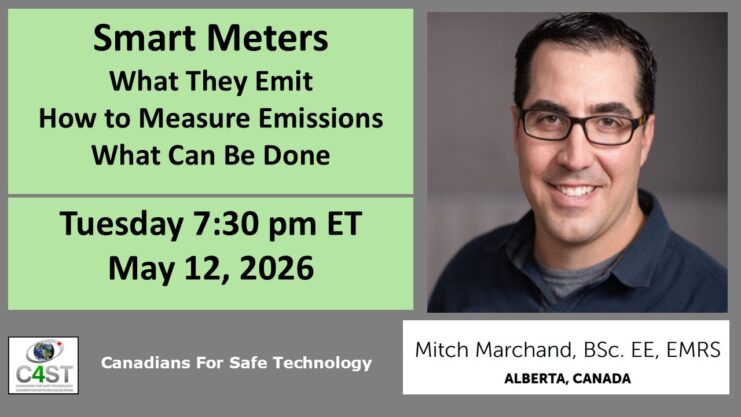
SMART METER WEBINAR –> C4ST on Facebook
Meeting ID: 972 5041 1732
Illuminate Canada Yellow 2026
Illuminate Canada Yellow 2026 is Lighting Up the Nation!  May in Canada

Where: Landmarks Across Canada
When: All Month Long This May
This month, landmarks from coast to coast to coast are lighting up for the 2nd Annual Illuminate Canada Yellow — a national campaign raising awareness about Environmental Sensitivities (ES), including Multiple Chemical Sensitivity (MCS), Electromagnetic Hypersensitivity (EHS), and mold-related illness.
More info on the Facebook Event page here
EMR 101 with Roman and Bohdanna Shapoval:
***********************************************************************************************