Debate Reignites as Quebec Physicians Raise Prospect of Extending MAID to Infants
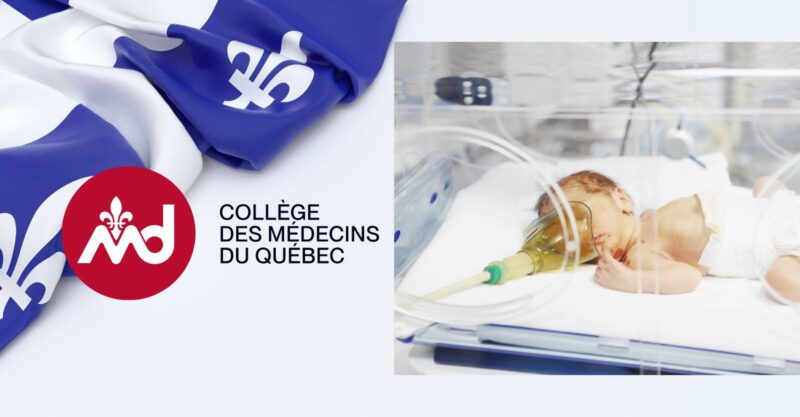
Canada’s medical assistance in dying (MAID) regime is again under scrutiny after comments from Quebec’s medical regulator suggested the practice could be considered for newborns in cases of extreme suffering.
Reported by The Post Millennial, the Quebec College of Physicians stated that MAID “may be an appropriate treatment for babies suffering from extreme pain,” and that parents “should have the opportunity to obtain this care for their infant.”
The remarks have sparked strong reactions across Canada, reviving ethical concerns many Canadians believed had been settled.
Canada legalized euthanasia in 2016. Initially framed as a narrowly defined end-of-life measure, the law has expanded significantly over time. Eligibility first applied to adults with terminal illness, then broadened to include individuals with non-terminal conditions.
Federal data show MAID deaths have increased steadily. By the end of 2024, official reports recorded:
-
16,499 MAID deaths in that year alone
-
76,475 total deaths since legalization
By early 2026, external estimates suggested the cumulative number had surpassed 94,000 deaths.
The debate over extending MAID to infants is not new.
Reported by LifeSiteNews, Louis Roy of the Quebec College of Physicians told Parliament’s Special Joint Committee on Medical Assistance in Dying in 2022 that MAID could potentially apply to:
“Babies from birth to one year of age” born with severe deformities or disabilities.
Reaction at the time was immediate.
Then–Minister of Employment, Workforce Development and Disability Inclusion, Carla Qualtrough, rejected the proposal, stating:
“There is no world where I would accept that.”
Following public backlash, many Canadians believed the idea had been abandoned.
However, recent comments from Quebec’s regulator have reignited debate and raised fresh concerns about the potential trajectory of Canada’s euthanasia framework.
The prospect of extending euthanasia to newborns raises some of the most profound ethical questions in modern medicine.
A newborn cannot provide consent.
Assessments of suffering become subjective and medically complex.
Safeguards designed for competent adults may not translate meaningfully to non-verbal patients.
Disability advocates have long warned that expanding MAID criteria risks sending a deeply troubling societal message about the value of vulnerable lives.
International coverage has intensified scrutiny of Canada’s MAID system, which critics describe as among the most permissive in the world.
Regardless of where Canadians stand on MAID, renewed discussion of infant eligibility touches foundational principles:
-
The role of medicine
-
Protection of vulnerable patients
-
Meaning of consent
-
Ethical limits of state-sanctioned death
For many Canadians, this debate is not theoretical. It speaks directly to public trust, medical ethics and the boundaries of end-of-life policy.
Sources:
The Post Millennial – Canadian doctors push for babies to be euthanized under MAID program
LifeSiteNews – Some Canadian doctors are pushing to allow euthanasia for newborns
The Catholic Register – Canada creeps ever closer to baby MAID
Government of Canada – Annual MAID Reports
The Quebec College of Physicians’ remarks have ensured that a debate many assumed was closed is now firmly back in the national conversation.
In Canada, MAiD for Children has been decided
Recommendations:
#14 – talk to children about k*lling them
#15 – fund Health Canada to talk to children about k*lling them
#16 – amend Criminal Code to be able to k*ll children #17 – start by k*lling the very sick children
#19 -… pic.twitter.com/COefNJaqKp— Delta Hospice Society (@DltaHspcSociety) February 10, 2026
*********************************************************************************************************