Canadian COVID Vaccine Injury Cases Draw International Attention as Thousands Remain Without Support
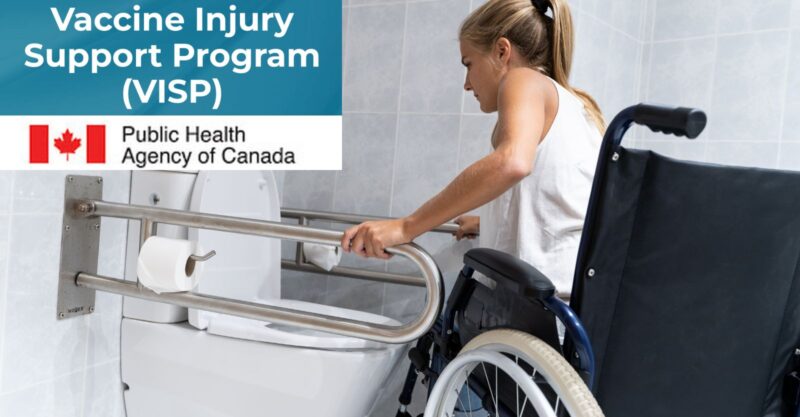
The human cost of Canada’s COVID-19 vaccine injury response is now making international news — and for many injured Canadians, that attention is long overdue.
A recent report by Nordic Times highlights mounting criticism of Canada’s Vaccine Injury Support Program (VISP), revealing that thousands of Canadians who report serious, life-altering injuries linked to COVID-19 injections have been denied compensation or left stuck in bureaucratic limbo — despite tens of millions of dollars spent on the program.
A promise made — and largely unfulfilled
Canada announced the VISP program in December 2020, promising support for those who suffered permanent or serious injuries after receiving COVID-19 vaccines. The program launched in June 2021, during a period when vaccination was heavily promoted — and, in many cases, required for work, travel, or participation in public life.
Nearly five years later, the results are stark — and deeply troubling.
As of June 1, 2025, only 234 people had received compensation through VISP. Approximately $18 million has been paid out for lost income and medical costs — a fraction of the more than $50 million spent on the program overall. Thousands of other applicants have been denied or remain waiting for decisions.
The result is a disgraceful outcome: millions spent, strict deadlines enforced, and thousands of injured Canadians left without help. Accountability now requires answers about how this program was designed, administered, and allowed to fail so many.
Millions spent — but not on the injured
A five-month investigation by Global News revealed that $34 million of VISP funding was spent on administrative costs by Oxaro, the private firm contracted to run the program.
Former employees described a casual workplace culture that stood in sharp contrast to the seriousness of the task: evaluating claims from Canadians whose lives had been permanently altered.
Following public scrutiny, the federal government announced that Oxaro’s contract will end on March 31, with the Public Health Agency of Canada set to take over administration on April 1. It remains unclear how much additional public money has been spent beyond the original allocation.
Canadians left behind by deadlines and delay
Among those featured in the international reporting is Kent Gillespie, a P.E.I. man who lived an active life before receiving his COVID-19 vaccine. He now struggles with balance issues and mobility, unable to climb stairs without losing his footing.
His physician considers his condition vaccine-related. Yet Gillespie was denied compensation — not because of insufficient medical evidence, but because he missed VISP’s three-year application deadline while navigating an overburdened healthcare system.
Now living on disability benefits, he describes the toll plainly:
“I’ve just kind of more or less given up. If it wasn’t for my daughter, I’d be giving up on life.”
Another case drawing attention is Laurie Irving, a nurse who worked with First Nations communities in northern Manitoba during the pandemic. Like many healthcare workers, she was required to receive a COVID-19 vaccine in order to continue working.
Irving later developed Latent Autoimmune Diabetes in Adults (LADA) — a lifelong condition her doctor believes was triggered by vaccination. Despite medical documentation, her VISP claim was denied after she missed the same three-year deadline.
“I’m not a conspiracy theorist. I understand why vaccines exist,” Irving said. “But the government needs to do what they said they would do — support Canadians who were injured or developed lifelong illness. They need to put their money where their mouth is.”
Irving can still work, but without group insurance, she must cover her medical costs herself.
A system that closes the door
According to federal data, thousands of VISP applicants are still waiting to learn whether they qualify for support. Others, like Gillespie and Irving, were excluded entirely due to strict timelines — even as they struggled through illness, disability, and healthcare backlogs.
When contacted for comment, Oxaro declined to be interviewed, referring questions to PHAC. Health Minister Marjorie Michel also declined an interview, and her office would not say whether the government plans to review the three-year deadline that has barred many injured Canadians from assistance.
Why this matters
The growing international attention underscores a reality many injured Canadians already know: acknowledgment has been slow, accountability limited, and support inconsistent.
Canada’s vaccine injury program was presented as a safeguard — a reassurance that those harmed in the name of public health would not be abandoned. For thousands, that promise remains unmet.
As these stories reach a global audience, Canadians are left asking a simple question: Why has it taken international scrutiny for these voices to be heard at home?
For Canadians who complied in good faith, this is not just a policy failure — it is a disgraceful one.
Sources:
The Nordic Times, Criticism of Canada’s COVID Vaccine Program – Thousands Left Without Help
Global News, Investigation into Canada’s Vaccine Injury Support Program
Global News, $50M Vaccine Injury Support Program Still Failing Injured, Say Advocates
*********************************************************************************************************