Critics Warn of Expanding Government Powers
Among the bill’s most controversial provisions is the creation of a new Digital Safety Commission that would have the authority to establish standards, audit platforms, and impose substantial penalties for non-compliance. Opponents argue that many of the details governing how the law would be implemented have been left to future regulations and decisions by the commission itself.
The Canadian Civil Liberties Association has warned that the legislation risks granting broad powers to government regulators while leaving key questions unanswered. Internet law experts have also raised concerns that significant elements of the regulatory framework have yet to be defined.
Privacy and Charter Concerns
Opponents of Bill C-34 have also questioned how age restrictions would be enforced. Privacy advocates argue that meaningful age verification could require users to provide identification or other personal information before accessing social media platforms, raising privacy concerns for Canadians of all ages.
Constitutional scholars have further suggested that aspects of the legislation may face Charter challenges related to freedom of expression, privacy rights, and equality protections.
Questions About Effectiveness
Some experts have also questioned whether social media bans are likely to achieve their stated objectives. They point to limited evidence supporting broad social media prohibitions for youth and note that similar approaches adopted elsewhere have faced compliance challenges.
Others argue that Canada already possesses laws and reporting mechanisms to address online exploitation and that greater emphasis should be placed on enforcement of existing protections rather than creating new regulatory structures.
A Debate That Extends Beyond Child Safety
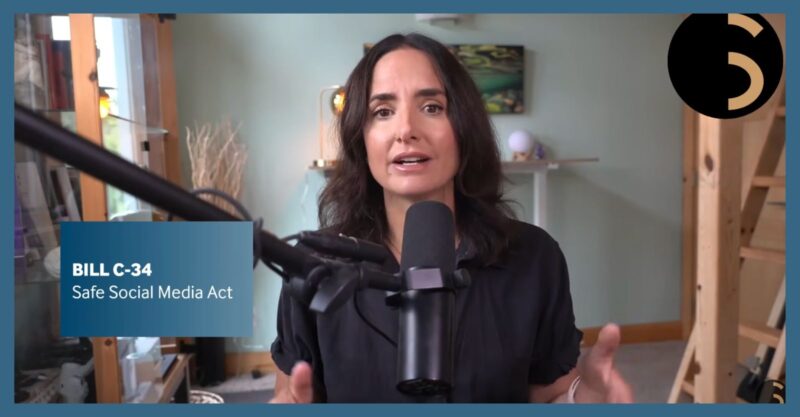
While the government has framed Bill C-34 as a child protection measure, opponents contend that the legislation could have implications reaching far beyond youth online safety. They argue the bill is part of a broader trend toward increased regulation of online platforms and digital communications.
Whether Bill C-34 ultimately protects children or creates new risks to privacy, parental authority and freedom of expression remains at the heart of the debate.