

New Research Examines Vitamin D, Sunlight and Vaccine-Related Health Outcomes

Emerging research is drawing renewed attention to one of the body’s most fundamental health regulators: vitamin D.
Two newly published peer-reviewed studies suggest vitamin D status may influence both recovery from post-vaccination illness and the severity of vaccine-associated heart inflammation. At the same time, a large population study is prompting renewed discussion about sunlight exposure, vitamin D production, and whether avoiding the sun may have unintended health consequences.
Taken together, the findings reinforce a growing body of evidence that adequate vitamin D—and the sensible sun exposure that naturally produces it—may play a far greater role in immune function and overall health than many people realize.
Vitamin D Shows Promise for Patients With Post-Vaccination Chronic Fatigue Syndrome
Researchers in Japan evaluated 28 patients diagnosed with myalgic encephalomyelitis/chronic fatigue syndrome (ME/CFS) following COVID-19 vaccination who were found to have low vitamin D levels.
After receiving vitamin D replacement therapy, which included supplementation, dietary guidance and recommendations for sun exposure:
- 82.1% of patients experienced complete resolution of symptoms.
- Fatigue severity scores improved significantly.
- Blood vitamin D levels increased substantially.
The authors concluded that vitamin D deficiency may contribute to symptoms in some patients who develop ME/CFS following COVID-19 vaccination and suggested that vitamin D replacement could represent a safe and potentially effective treatment strategy for patients found to be deficient.
Although the study was relatively small and lacked a placebo control group, its high rate of reported symptom improvement supports further investigation through larger randomized clinical trials.
Higher Vitamin D Levels Linked to Less Severe Vaccine-Associated Myocarditis
A second peer-reviewed study examined patients who developed acute myocarditis following Pfizer-BioNTech’s BNT162b2 COVID-19 vaccine.
Researchers found that individuals with higher vitamin D levels experienced significantly milder heart inflammation than those with lower levels.
Patients with vitamin D deficiency demonstrated:
- Greater cardiac injury
- Higher inflammatory markers
- More severe disease presentations
The researchers proposed that vitamin D’s well-established anti-inflammatory and immune-modulating properties may help reduce the severity of vaccine-associated myocarditis.
While the findings do not establish causation, they add to existing evidence suggesting vitamin D status may influence cardiovascular and immune health.
Sunlight: More Than Just Vitamin D
Vitamin D is often associated with bone health, but scientists increasingly recognize its much broader role throughout the body.
Vitamin D receptors are present in nearly every major organ system, and vitamin D influences immune regulation, inflammation, cardiovascular function, muscle health, neurological function and cellular repair.
Sunlight also produces biological effects that extend beyond vitamin D production, including regulation of circadian rhythms, nitric oxide release and other pathways involved in human health.
Some researchers estimate that sunlight exposure influences the activity of thousands of genes involved in numerous biological processes.
Study Sparks Discussion About Frequent Sunscreen Use
Focal Points Courageous Discourse
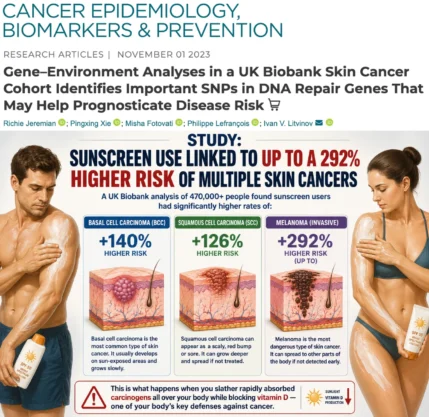
Adding another dimension to the conversation, researchers analyzing data from more than 470,000 participants in the UK Biobank found that people who reported more frequent sunscreen use also had significantly higher rates of several forms of skin cancer. Researchers observed a dose-response relationship—the more frequently participants reported using sunscreen, the higher the observed risk of melanoma, basal cell carcinoma and squamous cell carcinoma. However, because the study was observational, it cannot determine whether sunscreen itself contributed to the increased cancer risk.
Compared with infrequent sunscreen users, frequent users demonstrated:
- Nearly four times the risk of melanoma
- More than double the risk of basal cell carcinoma
- More than double the risk of squamous cell carcinoma
Researchers adjusted for numerous factors known to influence skin cancer risk, including age, sex, skin colour, hair colour, tanning ability, childhood sunburn history, tanning bed use and time spent outdoors.
However, because the study was observational, it cannot determine whether sunscreen itself contributed to the increased cancer risk. Other unmeasured factors—including differences in sun exposure habits, genetics or behavioural patterns—could also influence the findings.
The study has nevertheless renewed discussion about balancing protection from excessive ultraviolet radiation with maintaining adequate vitamin D levels through sensible sunlight exposure.
The Debate Over Chemical Sunscreens
The findings also renew attention to concerns surrounding certain chemical sunscreen ingredients.
Previous research has demonstrated that several commonly used ultraviolet (UV) filter chemicals—including oxybenzone, octocrylene and homosalate—can be absorbed into the bloodstream after topical application. Some sunscreen products have also been voluntarily recalled in recent years after testing detected benzene contamination, although benzene is not an intended sunscreen ingredient.
Mineral sunscreens containing zinc oxide or titanium dioxide are generally considered to have lower systemic absorption than many chemical formulations.
A Balanced Approach to Sun Exposure
None of the new research suggests that people should seek excessive sun exposure or allow themselves to burn.
Rather, these studies contribute to an evolving scientific discussion about balancing protection from excessive ultraviolet radiation with preserving the health benefits of moderate sunlight exposure and maintaining adequate vitamin D levels.
For individuals concerned about their vitamin D status, healthcare providers can measure vitamin D levels with a simple blood test and recommend supplementation when appropriate.
As researchers continue to investigate the relationship between vitamin D, immune function, cardiovascular health and recovery from vaccine-related adverse events, one message is becoming increasingly clear: maintaining adequate vitamin D may be an important component of overall health.
Sources:
Kodama S, et al. Efficacy of vitamin D replacement therapy on 28 cases of myalgic encephalomyelitis/chronic fatigue syndrome after COVID-19 vaccination. Nutrition. 2025.
The protective role of vitamin D in BNT162b2 vaccine-related acute myocarditis. International Journal of Cardiology. 2025.
UK Biobank sunscreen study, June 9, 2026. Gene-environment analyses in a UK Biobank skin cancer cohort identifies important SNPs in DNA repair genes that may help prognosticate disease risk
Jeremian R, et al. Gene-environment analyses in a UK Biobank skin cancer cohort. Frontiers in Genetics. 2023
**********************************************************************************************