
Canadian Study Found GMO Pesticide in Unborn Babies — Why Didn’t Health Canada Respond?
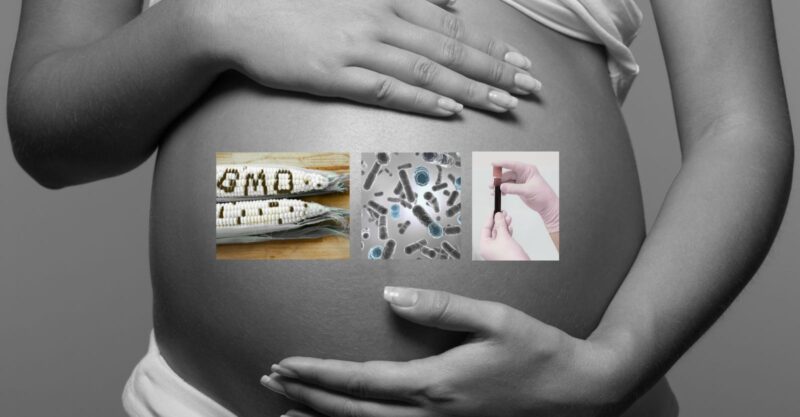
A Québec study detected a genetically engineered pesticide toxin in maternal and fetal blood samples—raising alarm over prenatal exposure and the lack of regulatory response.
In 2011, a quiet paper out of Québec should have changed the global conversation about genetically modified foods forever.
It didn’t. It was buried.
The study, from researchers at the Université de Sherbrooke Hospital in Montréal, measured traces of industrial agri-chemicals in the blood of pregnant women and their unborn babies. It was titled “Maternal and fetal exposure to pesticides associated with genetically modified foods in Eastern Townships of Québec, Canada” and published in Reproductive Toxicology.
What they found was both simple and earth-shattering:
93% of pregnant women’s blood contained Cry1Ab; the insecticidal protein produced inside GMO corn.
80% of fetal cord blood contained it too.
This was the same Bt toxin (short for Bacillus thuringiensis) that biotech companies promised would never make it past our digestive tract. It had crossed from food into the bloodstream and even through the placenta.
What “Bt” really is
But in the 1990s, biotech corporations took this common soil organism and rewired it into plants’ DNA.
Instead of spraying Bt on the leaves, they made corn and cotton produce the bacterial toxin internally, in every cell including kernels, roots, and pollen. The result: a self-poisoning plant, engineered to manufacture its own pesticide continuously.
That bacterial protein (Cry1Ab) isn’t supposed to persist in mammals.
And yet, the Montréal study found it circulating not only in women’s blood, but in fetal cord blood.
The chemicals they tested and what they found
- Glyphosate – the active ingredient in Roundup herbicide
- Glufosinate – another herbicide used on GM canola and soy
- Cry1Ab – the Bt toxin produced within GM corn
The herbicides were mostly absent, the toxin manufactured inside the GMO plants was the one that persisted.
That’s the real story: the synthetic toxin outlasted the chemicals it was designed to replace.
Why this should have triggered alarm
This finding implies:
- The transgenic protein survived digestion (defying claims that it’s destroyed in the stomach).
- It entered systemic circulation.
- It crossed the placental wall entering the body of a developing fetus.
In the world of toxicology, that’s a five-alarm event.
And yet, no one in government or industry initiated a single follow-up study to determine what this meant for fetal or neurological development.
No replication. No long-term monitoring. Nothing.
It’s as if the discovery was too inconvenient to exist.
What the regulators did instead
But concentration isn’t the point. Presence is.
The Bt toxin isn’t supposed to be there at all.
Instead of commissioning replication, regulators leaned on theoretical digestion models claiming that in principle, the protein should degrade in acid. That’s like claiming the Titanic couldn’t sink because ships are supposed to float.
Why this matters more than ever
- Corn syrup and corn oil
- Processed snacks and baby foods
- Livestock feed and pet food
- Bioengineered dairy alternatives and “precision fermented” proteins now marketed as green solutions
And yet, in three decades of GMO consumption, there have been no pregnancy studies, no trials measuring fetal outcomes, no generational follow-up, no epigenetic data.
We know more about how Tylenol crosses the placenta than we do about the bioengineered foods eaten at nearly every meal.
The deeper issue
Science is supposed to respond to evidence with inquiry.
When evidence threatens a billion-dollar market, it instead meets silence.
A question worth asking
“Why was the first documented transfer of a genetically modified insecticidal protein into human fetal blood never studied again?”
It’s not a radical question. It’s the baseline of public health ethics.
Reference
Final thought
A society that lets engineered pesticides enter its unborn children’s blood then looks away has lost its moral compass.
Originally published on Substack by Dr. Michelle Perro
Visit the Canadian Biontechnology Action Network (CBAN) to learn more about GM foods in Canada.
**********************************************************************************************************************************