84.4% of Cancer Patients See Positive Outcomes Using Ivermectin and Mebendazole
Study reports strong clinical responses in patients using repurposed therapies
A newly released study—“Real-World Clinical Outcomes of Ivermectin and Mebendazole in Cancer Patients: Results from a Prospective Observational Cohort”—published April 7, 2026, is drawing global attention after reporting significant outcomes in cancer patients treated with the repurposed drugs ivermectin and mebendazole.
The study was conducted by researchers affiliated with the McCullough Foundation, The Wellness Company, and the Yale School of Public Health, including Nicolas Hulscher, Kelly Victory, James A. Thorp, Drew Pinsky, Alejandro Diaz-Villalobos, Peter Gillooly, Peter A. McCullough, and Harvey Risch, among others.
The observational study analyzed 197 cancer patients undergoing a physician-supervised protocol. After approximately six months, 84.4% of participants reported no evidence of disease, tumor regression, or disease stabilization—a measure described as the study’s clinical benefit rate.
The cohort included prostate (27.9%), breast (18.3%), lung (8.6%), colon (5.1%), urologic (4.6%), pancreatic (3.0%), liver (2.5%), gynecologic (2.5%), and hematologic cancers (2.5%).
Real-World Evidence Points to Clinical Benefit
The study tracked patient-reported outcomes from individuals prescribed ivermectin and mebendazole off-label by licensed physicians. Participants received compounded oral medications and completed standardized follow-ups at approximately six months.
Of the 197 patients enrolled, 122 completed follow-up reporting. Nearly half reported the strongest outcomes—including tumor regression or no evidence of disease—while an additional portion reported stable disease.
Converging Evidence From Prior Research
The study builds on existing scientific interest in drug repurposing—using established medications for new therapeutic applications.
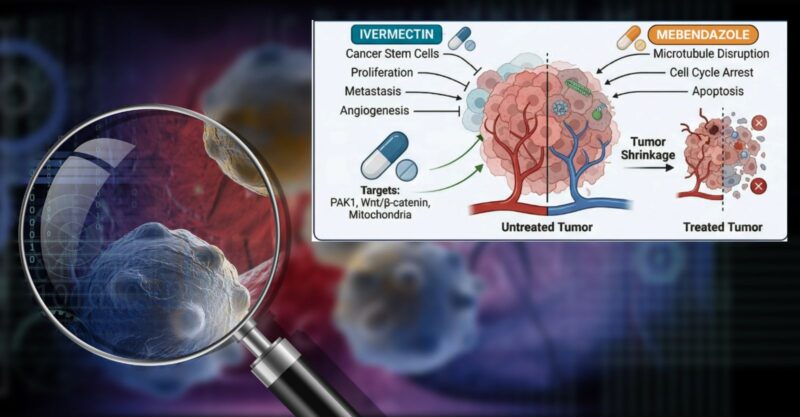
Both ivermectin and mebendazole have demonstrated anti-cancer activity in preclinical research, including effects on tumor growth, cancer stem cells, and key biological pathways involved in cancer progression.
A Signal That Demands Further Investigation
While observational, the findings represent one of the largest real-world datasets to date examining this combination in cancer patients.
The authors conclude that the results provide a “compelling clinical signal” and call for further research, including controlled trials, to better understand the potential role of these repurposed drugs in cancer care.
Sources:
The Focal Points Substack, “84.4% of Cancer Patients Taking Ivermectin + Mebendazole Reported No Evidence of Disease, Tumor Regression, or Cancer Stabilization After 6 Months”
************************************************************************************************************************************