Court Blocks U.S. Childhood Vaccine Schedule Changes
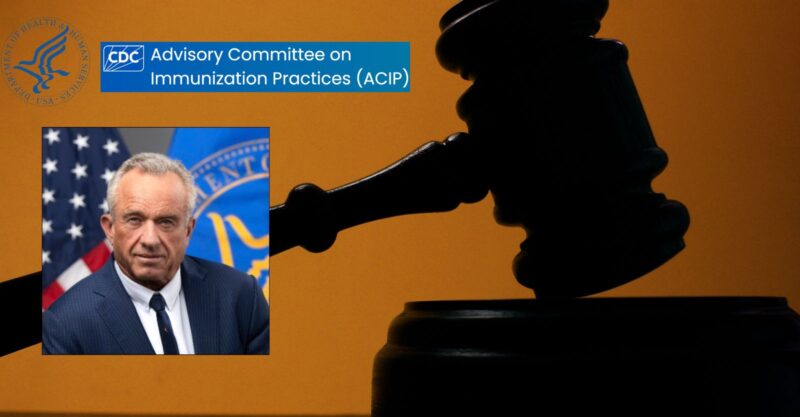
A U.S. federal judge has blocked sweeping changes to the childhood vaccine schedule and halted actions by the Advisory Committee on Immunization Practices (ACIP), dealing a significant setback to recent federal health policy shifts.
The decision pauses actions taken under U.S. Health Secretary Robert F. Kennedy Jr., including efforts to restructure ACIP and revise federal vaccine recommendations for children.
Court Ruling Disrupts ACIP Itself
The decision goes beyond blocking policy changes.
By halting the appointment of new members, the court effectively renders the current Advisory Committee on Immunization Practices (ACIP) unable to operate, preventing it from meeting or issuing recommendations.
All actions taken by the reconstituted committee have been invalidated, and federal vaccine guidance has reverted to the schedule in place before the changes.
The ruling centers on whether officials violated federal law in reshaping the committee itself, raising broader questions about how vaccine policy is structured — and who controls it.
Court Freezes Policy Changes, Shuts Down Advisory Committee
The court order:
- Blocks newly appointed members of the federal vaccine advisory committee
- Invalidates recent committee votes
- Cancels upcoming meetings
- Reverts the childhood schedule to prior recommendations
The judge found the plaintiffs — including major medical organizations — were likely to succeed in arguing that the government failed to follow proper legal and procedural requirements.
Importantly, this is a temporary ruling, with appeals expected.
HHS Weighs Next Move After Court Block
Following the ruling, the U.S. Department of Health and Human Services is now considering whether to replace members of the Advisory Committee on Immunization Practices (ACIP) or appeal the decision.
The court found the current panel was likely improperly appointed, halting its work and invalidating recent actions.
Officials have not confirmed next steps, but the move signals the administration is seeking a path to reassert control over vaccine policy and advisory decisions.
The outcome could determine whether similar changes move forward — or face further legal challenges.
Not About “Science” — About Process and Power
Legal experts emphasize the case is not about whether the schedule changes are beneficial or harmful.
Instead, it focuses on whether government officials:
-
Followed lawful appointment processes
-
Respected rules governing advisory bodies
-
Acted within their authority
That distinction matters. Courts are scrutinizing how decisions are made — not just what decisions are made.
Even if the ruling stands, similar policy changes could be reintroduced through different legal channels.
The implications extend beyond the U.S.
Why Canadians Should Pay Attention
Canada often mirrors or relies on U.S. public health frameworks, including guidance that influences recommendations from the National Advisory Committee on Immunization and policies implemented by the Public Health Agency of Canada.
The case highlights similar concerns in Canada::
-
Centralized decision-making with limited transparency
-
Advisory bodies operating with significant influence but little public accountability
-
Rapid policy shifts with real-world consequences for families
Unlike in the U.S., where legal challenges can quickly halt federal actions, Canadians face fewer avenues to challenge public health decisions once implemented.
Growing Legal Pressure on Public Health Authority
The case reflects a broader trend: increasing legal scrutiny of public health agencies and their authority.
In recent years, Canadians have seen similar tensions emerge during:
-
Pandemic-era mandates
-
Emergency powers
-
Ongoing debates around informed consent and bodily autonomy
While Canada has not seen an equivalent court ruling on vaccine policy, the U.S. decision signals that government health authorities are not beyond legal challenge.
What Happens Next
-
The U.S. government is expected to appeal
-
Higher courts may overturn or uphold the ruling
-
A final outcome could take months or longer
In the meantime, the case underscores a critical issue for both countries:
Who decides public health policy — and who holds them accountable?
For Canadians, the question is no longer theoretical.
As public health decisions continue to shape access to education, employment and travel, the demand for transparency, accountability and informed consent is only growing.
Federal court blocks ACIP meeting and pauses changes to the childhood vaccine schedule. Attorney Rick Jaffe breaks down the ruling on Good Morning CHD:
Del Bigtree also weighed in on the decision.
Click here to listen

Sources:
CHD’s The Defender. Breaking: Federal Court Blocks ACIP Meeting, Changes to Childhood Vaccine Schedule
CHD’s The Defender. Will Ruling Against RFK Jr.’s Vaccine Policies Stand? Legal Experts Weigh In
****************************************************************************************