

Polio Travel Warning: Media Hype Outpaces the Data Says Dr. Suzanne Humphries
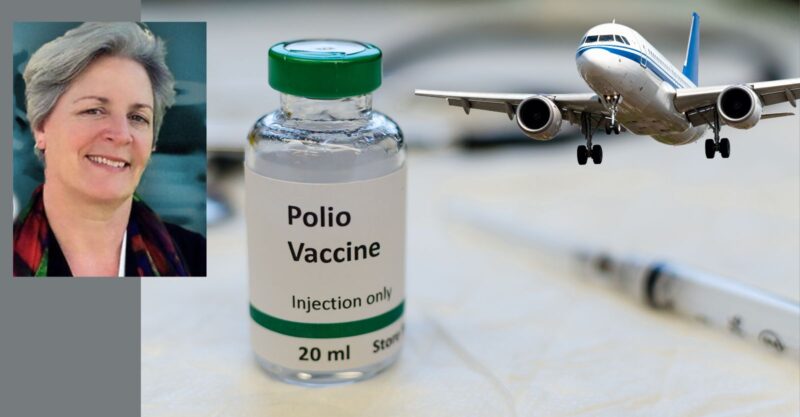
Physician and researcher Dr. Suzanne Humphries says travel advisory relies largely on wastewater detections rather than human cases, while media coverage amplifies fears of a disease that rarely causes symptoms.
A recent travel advisory issued by the Centers for Disease Control and Prevention (CDC) warning of poliovirus detections in more than 30 countries has sparked widespread media coverage — but some researchers say the alert may exaggerate the actual risk. The Government of Canada also updated its Polio: Advice for Travellers.
Physician and researcher Dr. Suzanne Humphries says the advisory relies largely on environmental detections rather than documented illness, raising questions about how the threat is being portrayed to the public.
Speaking on CHD.TV’s “Good Morning CHD,” Humphries, author of “Dissolving Illusions” said headlines suggesting a resurgence of a crippling disease fail to reflect what the underlying data actually show.
“They want us to think that polio is taking over the world,” Humphries said.
Travel advisory largely based on wastewater detections
The agencies have issued a Level 2 “Practice Enhanced Precautions” advisory for more than 30 countries where poliovirus has been detected, recommending that travelers be up to date on polio shots before visiting certain destinations.
However, many of the detections cited in the advisory come from wastewater surveillance, not confirmed human cases of illness.
In late 2025, Germany reported poliovirus fragments detected in sewage samples. Officials from the country’s Robert Koch Institute said the risk to the general population remained very low.
Humphries said such environmental monitoring can be interpreted in ways that make the situation appear more alarming than it actually is.
“They weren’t human cases, but they’re calling them ‘cases’ because they love that word,” she said.
Data from the European Centre for Disease Prevention and Control show that countries including the United Kingdom and Poland remain polio-free, even though vaccine-derived poliovirus has occasionally been detected in wastewater.
Humphries said the CDC advisory appears to rely heavily on those environmental detections rather than documented illness.
“If polio is no risk to Germans, why does the CDC think it’s a risk to fully vaccinated Americans?” she asked.
Most infections cause no symptoms
Humphries also said many headlines warning about a paralyzing disease overlook an important fact acknowledged by the CDC itself — most infections cause no symptoms.
According to CDC data:
• Most people infected with poliovirus have no visible symptoms
• About 1 in 4 experience mild flu-like symptoms
• Fewer than 1% develop weakness or paralysis
Despite this, media coverage often focuses on the most severe outcome.
“The message is there’s a crippling and potentially deadly disease,” Humphries said, “despite the reality that 95% of people who contract polio don’t even have any symptoms.”
Questions about booster recommendations
The CDC advisory recommends that adults who previously completed the routine polio shot series may receive a single lifetime booster before traveling to certain destinations.
Humphries questioned that recommendation and noted that the inactivated polio injection used today produces antibodies but does not necessarily prevent infection or transmission.
“It does not stop you swallowing a virus,” she said. “It does not stop you passing it on to anybody else.”
Changes in case definitions complicate comparisons
Humphries also raised concerns about how polio cases are tracked today.
Modern global surveillance programs monitor acute flaccid paralysis (AFP) — a broader category of paralysis that includes polio but can also have other causes.
In the late 1990s, the World Health Organization expanded its eradication program to track AFP cases worldwide.
Humphries said that change makes it difficult to compare modern polio statistics with historical numbers because cases that might once have been classified as polio may now be categorized differently.
Debate over historical narratives
Humphries also questioned the commonly cited claim that former U.S. president Franklin D. Roosevelt had polio.
Research led by pediatrician Armand Goldman concluded Roosevelt’s illness more closely resembled Guillain-Barré syndrome, an autoimmune neurological condition.
Humphries said repeating the claim that Roosevelt had polio reinforces fear-based narratives about the disease.
Petition seeks review of polio shot approval
Recent media reports have also linked criticism of polio vaccines to U.S. Health Secretary Robert F. Kennedy Jr..
However, Humphries said a 2022 citizen petition referenced in several news reports was filed by attorney Aaron Siri.
The petition asked the U.S. Food and Drug Administration (FDA) to review approval of the polio injection IPOL, manufactured by Sanofi, for use in children until additional safety testing is conducted.
According to the petition, the clinical trial used for approval monitored safety for only three days after injection and did not include a placebo control group.
Looking beyond headlines
Humphries said public health messaging increasingly relies on fear-driven narratives, particularly as public trust in health authorities has declined in the years following the COVID-19 pandemic.
Instead of reacting to alarming headlines, she encouraged people to examine the available evidence.
“If you start to feel fear, your next move should be: stop and look through the ingredients,” she said.
Ultimately, Humphries said parents — not media outlets or public health authorities — are responsible for making medical decisions for their children.
“You’re in charge of looking after your own child,” she said. “The safety of that child is in your hands.”
Click on the image to watch Dr. Humphries and Polly Tommey on “Good Morning CHD”
Source:
CHD’s The Defender, Fact or Fear? CDC Warns Travelers About Polio — Here’s What the Data Show
*************************************************************************************************************************************’